


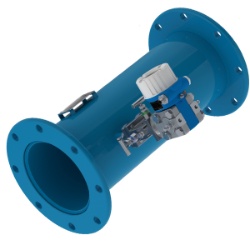
Municipal flow applications utilities and districts need propeller meters, an electromagnetic meter, or any other type of no moving parts meter that acts as an ultrasonic device. However, there are some situations where differential pressure (DP) meters are a more viable option – more specifically, the VM V-Cone, a DP meter designed by McCrometer for multiple uses in municipal flow applications.
The VM V-Cone is convenient and low maintenance. Shutting down a water district’s pipeline for repairs proves to be a more costly hassle than it’s worth. Still, municipal flow measurement devices need routine cleaning due to the inevitable chemical buildup. The McCrometer’s product differs from others in that it is customizable with durable materials, made to withstand any flow. The meter has a minimum of a 25-year lifespan and practically no maintenance.
This meter is often picked for its self-conditioning technology and low straight run requirements – something older meters do not have. It requires no down or upstream straight runs, all the while keeping intact immaculate precision.
The VM V-Cone is designed for municipal application and has a lifetime guarantee for delamination and linear tearing. It is best used for pumping stations, filter galleries, well sites, pressure relief vaults, pits, manholes, and general distribution lines.
The Avanti Company provides on site flow meter testing with certified personnel to ensure that your flow meters are operating accurately and within required guidelines. Avanti is certified by the Water Management Districts for this type of testing and holds approved meter certifications. If you are interested in learning more about flow meters, please visit the Avanti Company online or call 800.284.5231.